AI receptionists · BKND Development, Elizabeth, NJ
AI medical receptionist for medical and dental offices
An AI receptionist answers your practice’s calls, books into your schedule, takes refill and new-patient requests, and hands anything clinical to a person. Paid plans we checked run $79 to $800 a month, and if it touches patient information your office needs a signed Business Associate Agreement first.
Vendor prices read from each vendor’s own page on October 26, 2026. Not a BKND quote.

- Packaged AI plans
- $79–$800
- a month for paid plans, published prices, not a BKND quote
- Build on a voice platform
- $0.07–$0.31
- a minute of AI talk time (Retell AI)
- Median U.S. receptionist
- $18.27/hr
- Bureau of Labor Statistics, May 2025
- Touches patient data?
- Get a BAA
- HHS: the vendor is a business associate
What it should and should not do
Which patient calls an AI receptionist can take
The safe line is simple. The AI takes calls with an answer it can check against your own systems. Anything that needs clinical judgment, money decisions or a calm human voice goes to a person, quickly.
Book, move or cancel a visit
The AI
Offer open times that follow your booking rules, write the booking, text a confirmation.
A person takes over
A rule the AI cannot check, like a provider squeezing in a long-time patient.
New patient
The AI
Take name, phone, reason for the visit and insurance, then book or send your intake forms.
A person takes over
The caller does not know which provider or service they need.
Prescription refill (medical)
The AI
Log the medication name and pharmacy and route it to your clinical team.
A person takes over
Always for the decision. The AI should never approve or promise a refill.
Cleaning or recall reminder (dental)
The AI
Offer the next hygiene opening and book it.
A person takes over
Questions about a treatment plan or what it will cost.
Insurance questions
The AI
Say which plans you accept, from the list your office approves.
A person takes over
Coverage for a specific procedure, a denial or a billing dispute.
Hours, directions, parking, forms
The AI
Answer from your approved information, any hour of the day.
A person takes over
Rarely needed.
Symptoms, pain or an emergency
The AI
Do not assess anything. Stop and follow the emergency rule your office wrote.
A person takes over
Always: transfer to staff, or tell the caller to call 911.
Upset caller or a complaint
The AI
Take the details and transfer.
A person takes over
Always, as fast as possible.
Medical vs dental
An AI dental receptionist and an AI medical receptionist do different jobs
Most buyer guides treat every practice the same. The calls are not the same, so the setup should not be either.
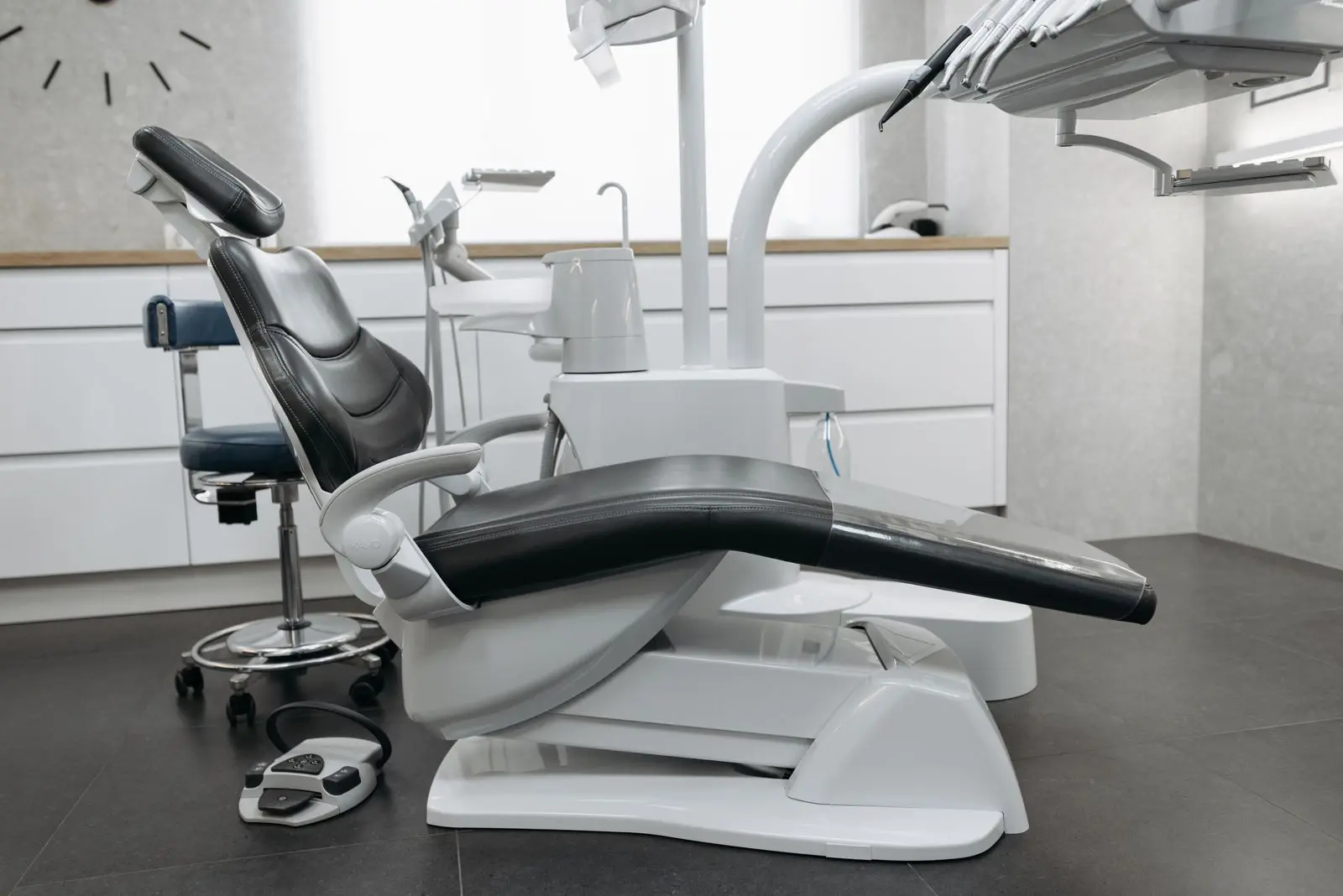
A medical office needs it to
- Books into the schedule your EHR or practice management system already uses, with each provider's visit types and lengths.
- Takes refill, referral and records requests as messages for staff, never as decisions.
- Sends lab result and prior authorization calls straight to a person.
- Knows your on-call rule for nights and weekends.
A dental office needs it to
- Books into your practice management system. Open Dental, Dentrix, Eaglesoft, Curve and Denticon are common names to ask about.
- Fills hygiene recall openings and confirms appointments.
- Collects new-patient insurance details before the first visit.
- Follows the dentist's own list of urgent dental calls, with the same hand-off as any emergency.
For both, ask the same question about bookings: does the AI write the appointment into your system the moment the call ends, or leave a request your team still has to enter? Both exist. Only one takes work off the front desk.
HIPAA and the Business Associate Agreement
If it hears patient information, it needs a signed BAA
HHS says a business associate is a person or company that creates, receives, maintains or transmits protected health information for a covered entity, such as your practice. Its own list of examples includes a “[t]hird-party vendor … chatbot on a provider’s patient portal that provides services involving the patient’s PHI such as … appointment scheduling.” An AI receptionist that books patients does the same work on the phone.
HIPAA lets your practice share that information with a business associate only after you get “satisfactory assurances” in a written contract: the Business Associate Agreement, or BAA. HHS says the BAA must describe what the vendor may do with the information, bar it from using or sharing it any other way, and, under the Security Rule, require it to report any security incident it becomes aware of.
The part buyers miss is the chain. An AI receptionist is usually several services joined together. HHS says a business associate must sign a BAA with each subcontractor before it shares patient information with them, and every one of those subcontractors is a business associate too. A “HIPAA-compliant” badge on a website is not the written agreement HHS describes.
Ask every vendor, and any builder, before you sign
- 01
Will you sign a BAA with our practice before the first patient call?
- 02
Which companies process our call audio, transcripts or messages (speech-to-text, the AI model, the voice, the phone carrier)? Do you hold a BAA with each one? HHS says a pure conduit, one that only transports information and does not access it beyond what the transport needs, is not a business associate. A service that transcribes, records or answers the call does more than transport it.
- 03
Where are recordings and transcripts kept, for how long, and can we export or delete them?
- 04
How fast will you tell us about a security incident, and who calls us?
- 05
What happens to our calls if your service goes down, what uptime do you commit to in the contract, and what is the remedy if you miss it?
- 06
Who is responsible under the contract when the AI books the wrong slot, writes insurance details down wrong or mishandles an urgent call? Read the limitation-of-liability clause: Retell AI's terms, for example, cap its total liability at what you paid for the service in the 12 months before the claim. Keep staff reviewing the exceptions.
HHS publishes sample BAA wording your attorney can compare against. This page explains the rules in plain English and is not legal advice.
New Jersey practices
Three phone rules to know before you switch it on in New Jersey
01 · Recording
One party’s consent
New Jersey’s Wiretapping Act allows a person who is a party to a call, or who has one party’s prior consent, to record it, unless it is done to commit a criminal or tortious act (N.J.S.A. 2A:156A-4(d)). Your practice is a party to its own calls. Announce the recording anyway, and ask counsel about callers in other states.
02 · Breaches
The vendor must tell you immediately
A company that keeps computerized records with personal information for another business must notify that business immediately after it discovers a breach (N.J.S.A. 56:8-163(b)). Before telling customers, the business reports the breach to the New Jersey State Police (subsection c). HIPAA’s own breach rules apply on top of this.
03 · Outbound reminder calls
An AI voice counts as an artificial voice
In February 2024 the FCC confirmed that the Telephone Consumer Protection Act’s limits on “artificial or prerecorded voice” calls cover AI-generated voices. Those calls need the called party’s prior express consent unless an emergency purpose or an exemption applies. If the AI will call patients, ask counsel which of your reminder calls qualify.
AI receptionist prices in 2026
What AI receptionists cost, from each vendor’s own pricing page
Every price below was read on October 26, 2026 from the page linked in its row. These are other companies’ list prices, not a BKND quote. The last column says what each pricing page tells you about HIPAA, because that decides whether a plan can take patient calls at all.
Goodcall
Starter / Growth / Scale
- Price
- $79 / $129 / $299 a month
- Includes
- 100 / 500 / 2,000 unique callers a month, then 79¢ / 26¢ / 15¢ each. No per-minute charges.
- HIPAA
- Not mentioned on the pricing page
Frontdesk (My AI Front Desk)
Business-in-a-Box
- Price
- $99 a month, or $79 a month billed annually
- Includes
- 200 voice minutes a month, plus web chat, texting and a CRM.
- HIPAA
- Not mentioned on the pricing page
Freed
Front Desk (in beta)
- Price
- $149 a month per block of 250 calls
- Includes
- Built for single-site practices with 1 to 2 phone numbers. Says it does not bill for spam or empty calls.
- HIPAA
- Page says HIPAA-compliant and SOC 2 Type II
Smith.ai
AI Receptionist: Free / Pro / Enterprise
- Price
- $0 / $150 / $500 a month
- Includes
- 25 / 75 / 300 calls a month. Enterprise with 500 calls is $800. Month to month, 30 days' notice to cancel.
- HIPAA
- Not mentioned on the pricing page
Retell AI
Pay as you go (a platform you build on)
- Price
- $0.07 to $0.31 a minute
- Includes
- Voice agent minutes only. Phone numbers are $2 a month each, 20 calls at once are included and each extra is $8 a month.
- HIPAA
- Plan table ticks HIPAA / BAA on pay as you go; a custom BAA is Enterprise only
The salary it is measured against. The median U.S. receptionist earned $38,010 a year, or $18.27 an hour, in May 2025, according to the Bureau of Labor Statistics. That is about $3,168 a month before payroll taxes and benefits, for one person who cannot answer at night.
Per-minute math. At Retell’s published $0.07 to $0.31 a minute, 1,000 minutes of AI talk time is $70 to $310 a month before phone numbers, add-ons and the work of building and testing the call flow. Healthcare-only vendors we checked (Arini, Confido Health, HelloPatient and Klinic) had no public price we could find.
For setup fees, per-call versus per-minute pricing and the costs vendors leave off the page, see our full AI receptionist cost guide.
Plan, vendor or built for you
Three ways to get an AI receptionist for your practice
A packaged AI receptionist plan
One location, simple scheduling, mostly after-hours or overflow calls.
Strengths
Low monthly price, live in days. Prices are public, so you can compare before a sales call.
Limits
Several of the pricing pages we checked do not mention HIPAA or a BAA. Get the signed BAA before any patient calls.
A healthcare-only vendor
Practices that want a product made for clinics and dental offices.
Strengths
Built around practice software, insurance and recall workflows.
Limits
None of the healthcare-only vendors we checked showed a public price. Expect a sales call and a quote.
A call flow built for your office
Practices with several providers, unusual booking rules, or calls that must land in more than one system.
Strengths
The script, hand-offs, booking rules and records follow how your office already works, not a vendor's default.
Limits
More work up front: someone has to design, connect and test it, and the same BAA questions apply to every service in the build.
Where BKND fits. We build AI receptionist call flows: what the AI is allowed to answer, when it must hand off, where every call is written down, and the test calls it has to pass before real callers reach it. For many offices the right first step is smaller, like a text back to every missed call or a cleaner intake form. We will say so if that is the better move.
The same workflow sits behind our patient intake automation, dental lead intake and missed-call automation work. If you are not a medical or dental office, our guide to an AI receptionist for small business covers other trades.
Before patients call it
Ten test calls to make before go-live
One good demo call proves nothing. Make these calls yourself, from a real phone, and read what landed in your schedule and your inbox afterwards.
- 01
A new patient who wants the first open slot next week.
- 02
An existing patient moving an appointment to a time that is already full.
- 03
A caller describing chest pain, or the dental emergency words your dentist listed.
- 04
The same emergency call at 9 p.m. on a Saturday, when nobody can take a transfer.
- 05
A refill request where the caller does not know the medication name.
- 06
A caller asking whether their insurance covers a specific procedure.
- 07
A caller who says "let me talk to a person" twice.
- 08
A noisy call from a car, with the caller cutting in mid-sentence.
- 09
A booking where your scheduling system is offline. The AI should take a message, not invent a time.
- 10
A wrong number, a spam call and a caller who hangs up halfway through.
FAQ
AI medical and dental receptionist questions, answered
- How much does an AI medical receptionist cost?
- Published prices we checked on October 26, 2026 run from $79 to $800 a month for paid, packaged AI receptionist plans (Goodcall, Frontdesk, Freed, Smith.ai), or $0.07 to $0.31 a minute on a voice platform you build on (Retell AI). None of these is a BKND quote. Healthcare-only vendors we checked (Arini, Confido Health, HelloPatient and Klinic) had no public price we could find. For comparison, the median U.S. receptionist earned $18.27 an hour in May 2025, according to the Bureau of Labor Statistics.
- Does an AI receptionist need a Business Associate Agreement (BAA)?
- Yes, if it creates, receives, keeps or sends patient information for your practice. HHS defines that vendor as a business associate, and HIPAA lets a covered entity share protected health information with one only after it gets satisfactory assurances in a written agreement. HHS also says the vendor needs its own BAA with every subcontractor that handles that information.
- Do AI receptionists work for medical and dental offices?
- They work for calls with a clear answer that can be checked against your systems: booking, rescheduling, hours, directions and taking a refill or new-patient request. They should not judge symptoms, settle billing disputes or calm an upset patient. Those calls need a fast route to a person, and you should test that route before patients ever reach it.
- Is there a free AI phone receptionist?
- Some plans start free. Smith.ai's free plan includes 25 calls a month and Retell AI starts you with $10 in free credits. Before any patient calls it, confirm the plan comes with a signed BAA: Smith.ai's pricing page does not mention HIPAA, while Retell's plan table ticks HIPAA / BAA on its pay-as-you-go plan.
- Can an AI dental receptionist book straight into Dentrix or Open Dental?
- Some can and some cannot, so ask the exact question: does the booking write into your practice management system the moment the call ends, or does it leave a request your team still has to enter? Ask for a live test against your own system and version, and ask who fixes it when the software updates.
- What happens when a patient calls with an emergency?
- Your office decides the words that count as an emergency, and the AI should stop and hand off the moment it hears them: transfer to a person during hours, and tell the caller to hang up and call 911 when the words describe a medical emergency. A dental office needs its own list of urgent dental problems, written by the dentist, with the same hand-off. Test every rule after hours, when there may be nobody to transfer to.
- Will an AI receptionist replace my front desk?
- The government's own projection points to a slow change, not a cliff: the Bureau of Labor Statistics expects receptionist jobs to fall 2% from 2025 to 2035, with about 105,100 openings a year still to fill. In a practice, an AI receptionist usually takes the calls that ring out today, after hours and during lunch, so the people at the desk can look after the patients in front of them.
- Is it legal to record and transcribe patient calls in New Jersey?
- New Jersey's Wiretapping Act allows a person who is a party to a call, or who has one party's prior consent, to record it, unless it is done to commit a criminal or tortious act (N.J.S.A. 2A:156A-4(d)). Your practice is a party to its own calls. Announcing the recording at the start is still good practice, and if you take calls from other states, ask your counsel whether their rules differ.
Related
- AI receptionist costPer-minute, per-call and custom pricing, with the fees vendors leave off.
- AI receptionist for small businessSetup, booking and hand-offs for trades outside healthcare.
- Patient intake automationForms, records and follow-up after the first call.
- Dental lead intake automationNew-patient requests that reach the right person.
Sources, read October 26, 2026
- HHS, Business Associates Frequently Asked Questions
- HHS FAQ 245, conduits are not business associates
- HHS, Sample Business Associate Agreement Provisions (published January 25, 2013)
- U.S. Bureau of Labor Statistics, Occupational Outlook Handbook: Receptionists
- N.J.S.A. 2A:156A-4, lawful interception (2025 New Jersey Revised Statutes, via Justia)
- N.J.S.A. 56:8-163, disclosure of a breach of security (via Justia)
- FCC Declaratory Ruling FCC 24-17 on AI voices and the TCPA (released February 8, 2024)
- Goodcall pricing
- Frontdesk (My AI Front Desk) pricing
- Freed Front Desk
- Smith.ai AI Receptionist pricing
- Retell AI pricing
- Retell AI terms of service (limitation of liability)