
If your New Jersey business is open to the public, the U.S. Justice Department's position is that the ADA covers what you offer on your website. No federal regulation sets a technical standard for private businesses. The standard the Justice Department chose for state and local governments is WCAG 2.1 Level AA, and it is the level we recommend building a business site to.
This guide is not legal advice. It sets out what the government sources say, what the 2025 lawsuit counts show for New Jersey, and where to start fixing. If you have received a demand letter or a lawsuit, speak to a lawyer licensed in New Jersey before you change anything.
Does the ADA apply to a New Jersey business website?
The Justice Department's web guidance of March 18, 2022 says the ADA covers businesses open to the public, which it calls public accommodations. Its examples include retail stores, banks, hotels, medical offices, and food and drink establishments. On websites, it says: "the Department has consistently taken the position that the ADA's requirements apply to all the goods, services, privileges, or activities offered by public accommodations, including those offered on the web." Read the guidance.
The same page is plain about the gap. "The Department of Justice does not have a regulation setting out detailed standards." Businesses "can currently choose how they will ensure" that what they offer online is accessible. It points to WCAG and the federal Section 508 Standards as helpful technical guidance.
Courts are not uniform on one question: whether a business that exists only online is covered. Seyfarth Shaw, a law firm that tracks these cases, reports that most New York federal district judges who have ruled on it say yes. It reports that California's federal and state appeals courts have said no. That question is about online-only businesses. A New Jersey business with a shop, office or clinic that customers visit is not online-only.
New Jersey's own law
New Jersey adds a state layer. The Law Against Discrimination bars disability discrimination in places of public accommodation. The Division on Civil Rights fact sheet's list of such places includes restaurants, retail stores, banks, doctors' offices and hospitals. It says these places "must make their goods and services accessible or provide reasonable accommodation unless the accommodation will cause an undue burden for the business." Read the fact sheet.
That fact sheet does not address websites. It states the duty in general terms. Whether a given website claim succeeds under the state law is a question for a New Jersey lawyer, not for this guide.
What the 2025 lawsuit numbers say about New Jersey
Website accessibility lawsuits filed in federal courts in 2025, counted by Seyfarth Shaw. That is 27% more than the 2,452 filed in 2024.
Seyfarth published the count on March 25, 2026. Website cases made up 36% of the 8,667 ADA Title III lawsuits filed in federal courts in 2025. Read Seyfarth's report.
- New York federal courts. 1,021 website lawsuits in 2025, the most of any state.
- Florida. 961, almost double its 470 in 2024.
- Illinois. 585.
- New Jersey federal courts. 22.
The New Jersey figure is federal court only. Seyfarth writes that New York federal courts have been "more demanding lately" about what a plaintiff must show to have standing, "which has led many plaintiffs to file in New York and New Jersey state courts instead of federal court." Seyfarth's counts leave state courts out.
A second tracker, UsableNet, counts website, mobile app and video cases and adds state courts. For January 1 to December 15, 2025 it counted 3,195 federal cases, plus 1,919 cases in New York and California state courts. Read UsableNet's report.
What this means for an owner in Union or Essex County: the federal number for New Jersey looks small. It does not show the state court filings Seyfarth describes, and it does not count demand letters that never become a case.
The 2027 and 2028 deadlines for New Jersey towns
State and local governments do have a fixed standard. The Justice Department's rule, published April 24, 2024, requires their web content and mobile apps to meet WCAG 2.1 Level AA, with limited exceptions. On April 20, 2026 the Federal Register published an interim final rule that moved the dates. Read the fact sheet.
- Governments with a total population of 50,000 or more. April 26, 2027.
- Governments under 50,000, and special district governments. April 26, 2028.
For a city or township, the rule's total population is its count in the most recent decennial Census. Read the definition. Take Elizabeth, where BKND's office is, and Livingston:
- Elizabeth city. 137,298 people in the April 1, 2020 Census, so its date is April 26, 2027. Census QuickFacts.
- Livingston township. 31,330 people in the April 1, 2020 Census, so its date is April 26, 2028. Census QuickFacts.

Why a private business should care: the rule follows the work, not the vendor. The fact sheet's own example is a county parks page that "must meet WCAG 2.1, Level AA even if a local web design company made the web page and updates it for the county." The rule covers content a government provides through someone else. If you provide online forms, booking or payment pages for a New Jersey town, school or authority, that content falls under its dates.
What "ADA compliant" means in practice
For a business, no regulation defines it. We use WCAG 2.1 Level AA as the benchmark, because it is the standard the Justice Department adopted for governments; WCAG is developed by the World Wide Web Consortium. The Justice Department's list of what businesses should do gives a plain-language version. Its list says it is not complete; these are the items it names:
- Color contrast. enough contrast between text and background for people with low vision or color blindness.
- Text cues with color. color is not the only signal, for example the word "required" beside red form fields.
- Alt text on images. a short description a screen reader can read aloud.
- Video captions. synchronized, accurate captions that identify speakers.
- Forms. labels, keyboard access, clear instructions, and an alert that says what went wrong and how to fix it.
- Zoom. text that still works when a visitor enlarges it in the browser.
- Headings. real headings in the page code, so screen reader users can move through the page.
- Keyboard access. navigation with keystrokes instead of a mouse.
- Checking. automated checkers paired with a manual check of the site.
- A way to report problems. a contact path for visitors who hit a barrier.
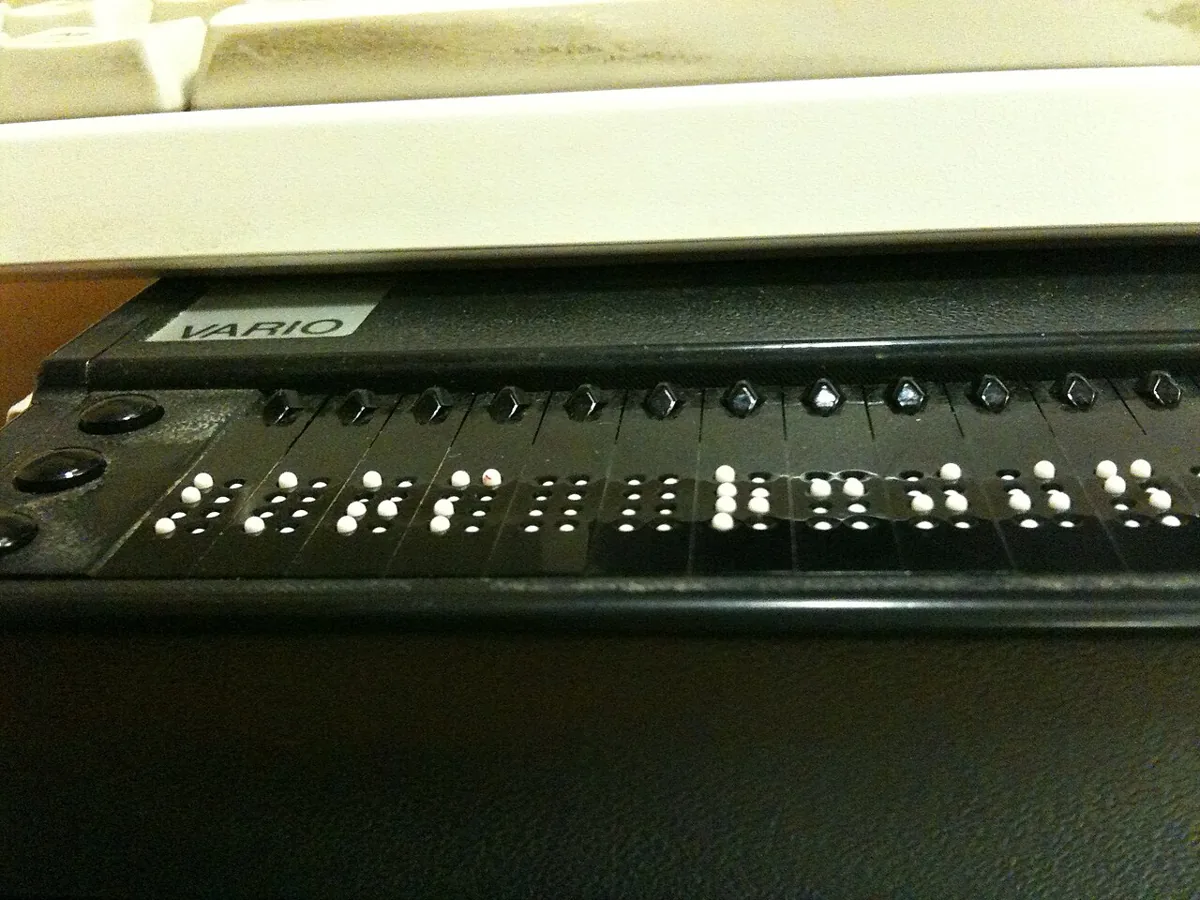
The six failures WebAIM finds most often
WebAIM has tested the home pages of the top one million websites each year since 2019. Its February 2026 run found detected WCAG 2 failures on 95.9% of them, with an average of 56.1 errors per page. Six types made up 96% of the errors it detected. Read the WebAIM Million.
- 01Low contrast text, on 83.9% of home pages.
- 02Missing alternative text for images, on 53.1%.
- 03Missing form input labels, on 51%.
- 04Empty links, on 46.3%.
- 05Empty buttons, on 30.6%.
- 06Missing document language, on 13.5%.
Those six are where a small business site should start. WebAIM adds a warning that applies to any scanner: "Absence of detected errors does not indicate that a page is accessible or conformant."
Why an overlay widget is not the fix
An overlay is a script added on top of a site. The Justice Department's guidance says automated checkers and overlays "can be helpful tools," but "they need to be used carefully. A 'clean' report does not necessarily mean everything is accessible."
The Federal Trade Commission went further with one vendor. Its order against accessiBe, issued April 21, 2025, required a $1,000,000 payment. It bars accessiBe from claiming that its automated product can make any website compliant with WCAG unless the claim is backed by competent and reliable evidence. Read the FTC order.
Our view: a widget sits on top of the site's code. The fixes that last are in the code itself: labelled forms, real headings, alt text written by someone who knows the image, and a keyboard path through the page.
A 30-day plan for a small business site
This is our recommended order, based on the sources above. It is a plan for the site, not a legal defense.
- 01Week one: run WebAIM's WAVE checker on your home page, contact page, and any page that takes a booking, an order or a payment.
- 02Week one: fix the six common failures on those pages first: contrast, alt text, form labels, empty links, empty buttons, page language.
- 03Week two: put the mouse away and use the site with the Tab and Enter keys only. Note each menu, pop-up or button you cannot reach.
- 04Week two: submit each form with a mistake in it. Check that the error message says what went wrong, in text, next to the field.
- 05Week three: add captions to videos and check that PDFs you link to can be read by a screen reader, or offer the same content as a web page.
- 06Week three: publish an accessibility statement with a phone number and an email for reporting problems. The Justice Department's list names a way to report problems.
- 07Week four: keep a dated record of what you checked, what you fixed and when. Re-check after a redesign or a new page.
If you are hiring someone to build or rebuild the site, ask for WCAG 2.1 Level AA in the contract, and ask how they test it beyond an automated scan.
Where BKND fits
BKND Development builds websites for New Jersey businesses from Elizabeth. Our own accessibility statement says we strive to conform to WCAG 2.1 Level AA, and that is the level we recommend for your site.
- New Jersey web design, with published prices. our New Jersey web design page.
- In Elizabeth and Union County. website design in Elizabeth, NJ.
- In Livingston and Essex County. web design in Livingston, written for practices and firms.
- Budgeting the work. what ADA website compliance costs.
Or contact us about your site.
Frequently Asked Questions
Is there a federal law that says my business website must meet WCAG?
Not in so many words. The Justice Department's position is that the ADA covers what public accommodations offer online. It has no regulation setting a technical standard for private businesses. The WCAG 2.1 Level AA requirement in the 2024 rule applies to state and local governments.
Does an accessibility widget make my website ADA compliant?
The Justice Department says automated tools and overlays need to be used carefully, and a clean report does not necessarily mean a site is accessible. The FTC's 2025 order bars accessiBe from claiming its automated product can make any website WCAG compliant without competent and reliable evidence.
Does the New Jersey Law Against Discrimination cover websites?
The Division on Civil Rights fact sheet on places of public accommodation does not address websites. It says those places must make their goods and services accessible or provide reasonable accommodation unless that causes an undue burden. Ask a New Jersey lawyer how that applies to your site.
How many website accessibility lawsuits were filed in New Jersey in 2025?
Seyfarth Shaw counted 22 in New Jersey's federal courts in 2025. Seyfarth also reports that many plaintiffs have moved to New York and New Jersey state courts, which its count does not include.
When do Elizabeth and Livingston have to meet WCAG 2.1 Level AA?
Under the April 2026 extension, Elizabeth, with 137,298 people in the 2020 Census, has until April 26, 2027. Livingston, with 31,330, has until April 26, 2028. These dates apply to the town governments' own web content, including content others provide for them.
Sources this guide uses
All read on November 21, 2026. Rules and counts change, so check the live version before you rely on a detail.
- U.S. Department of Justice: Guidance on Web Accessibility and the ADA (March 18, 2022)
- U.S. Department of Justice: Fact Sheet on the Title II web and mobile app rule, with the April 20, 2026 extension
- 28 CFR 35.104: definition of total population
- Seyfarth Shaw: Federal Court Website Accessibility Lawsuit Filings Bounce Back in 2025 (March 25, 2026)
- UsableNet: 2025 Year-End Digital Accessibility Lawsuit Report
- New Jersey Division on Civil Rights: Places of Public Accommodation fact sheet
- WebAIM: The WebAIM Million, 2026 report
- Federal Trade Commission: Decision and Order, In the Matter of accessiBe (April 21, 2025)
- U.S. Census Bureau QuickFacts: Elizabeth city, New Jersey
- U.S. Census Bureau QuickFacts: Livingston township, Essex County, New Jersey